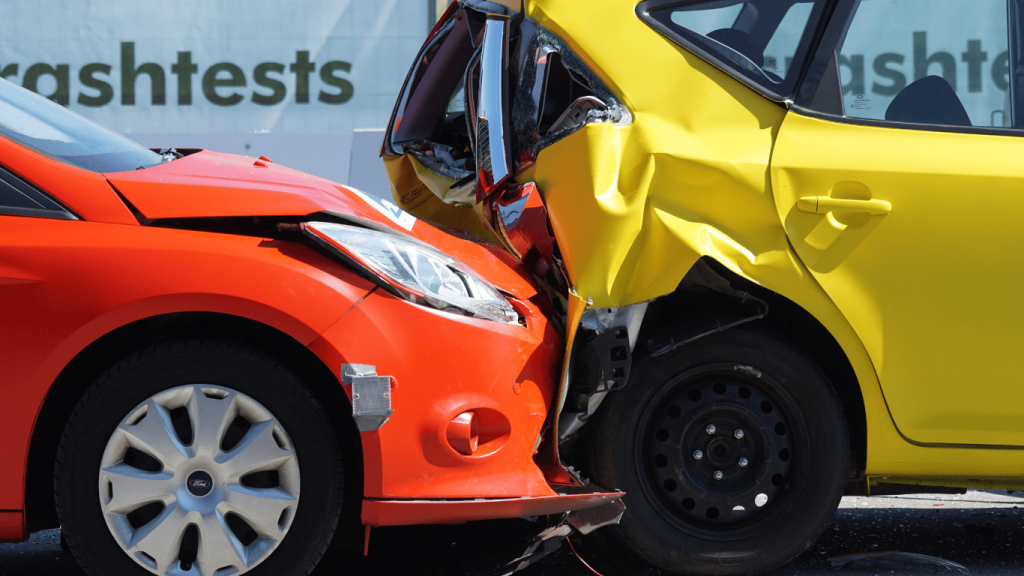








Most road users believe headlights are only for driving at night. That assumption regularly lands them with fines. California law says headlight use depends on visibility conditions, not just the time of day. The law prescribes strict color rules, as well as brightness, mounting height, and when you can use your high beams. A driver who doesn’t know these rules can end up with a citation on a clear afternoon, or worse, be blamed for a crash they didn’t cause.
Under California Vehicle Code § 24400, you must use your headlights from sunset to sunrise, any time visibility drops below 1,000 feet, and whenever your windshield wipers are running because of rain, fog, or snow. Your headlights must also meet specific rules for color, brightness, and mounting height to be street legal.
This article explores when California law requires headlights, what equipment is legal, what to do if you’re pulled over, and how a headlight violation can affect liability after a crash.
When Are Headlights Required in California?
California Vehicle Code § 24400 requires every motor vehicle, other than a motorcycle, to have at least two working headlamps and to have them on during darkness and inclement weather. That requirement has three categories:
From Sunset to Sunrise
The Vehicle Code defines darkness as the period from 30 minutes after sunset to 30 minutes before sunrise. Lawmakers added the additional 30 minutes for a good reason. Dawn and dusk are when vehicles without headlights are hard to spot. At these spots, drivers can easily make misjudgments.
The 1,000-Foot Visibility Rule
Headlights aren’t just a nighttime necessity. California law expects drivers to use their headlights at any time when conditions prevent them from clearly seeing a person or another vehicle from 1,000 feet away (roughly 3 football fields laid end to end), regardless of the hour. Heavy fog coming in from the coast, smoke from wildfires, or a dust storm can all trigger this rule, even at 2 in the afternoon.
The Windshield-Wiper Rule
Most drivers regularly miss this rule, despite it being a foundational part of California’s headlight requirements. When your wipers are running continuously due to mist, snow, fog, or rain, the headlights must be switched on. Always remember, wipers and headlights go together.
Daytime Headlight Zones and Tunnels
Some California highways are marked as daytime headlight zones with black-and-white “Daylight Headlight Section” signs. You’ll find them on mountain routes and rural passages with a history of dangerous crashes. Headlights are compulsory in these areas at any time, day or night. Always. The California Highway Patrol vigorously enforces the rule. Many tunnels carry the same requirement. These signs are not suggestions, so be sure to comply.
High-Beam Rules (CVC 24409)
Used correctly, high beams save lives. On a dark road, they can nearly double your vision range. Of course, this gives you more time to react to an animal, a stopped car, or a pedestrian. However, those same high beams can blind an oncoming driver.
California Vehicle Code § 24409 sets the boundary between the two:
Oncoming traffic
When another vehicle approaches from the opposite direction, you must switch to low beams once it is within 500 feet (about 1.5 football fields).
Following traffic
When you’re driving behind another vehicle, you must dim your high beams once you’re within 300 feet (roughly one football field) of it. High beams bouncing off a rear-view mirror can disorient the driver ahead, which is as dangerous as direct head-on glare.
What Headlights Are Legal in California?
Not all headlights on the market are legal on California roads. The rules cover color, brightness, mounting position, and what you’re allowed to bolt to your bumper. Missing any one of them can turn a routine stop into a fix-it ticket.
Color Rules (White/Yellow; Blue/Red/Green Illegal)
California Vehicle Code § 25950 states that any light visible from the front of your vehicle, including your headlights and fog lights, must be white or yellow. Nothing else is allowed. Using blue or green lights for their exceptional performance immediately makes your vehicle’s lights illegal, regardless of how they’re marketed or what the packaging claims about visibility.
These colored lights become an issue with high-Kelvin HID and LED bulbs rated at roughly 6,500K or higher, and appear blue. A bulb marketed at 8,000K or 10,000K will generally fail this test, even if you bought it as a “headlight upgrade.” An officer doesn’t need a lumen meter to write that citation. The color is clearly visible.
Brightness Limits (HID/LED)
California restricts headlight output to prevent these lights from becoming a hazard. The legal light output is 2,513 lumens per headlamp as referenced by CVC 24409 and federal lighting rules. Stronger lamps, typically found in aftermarket HID kits designed for halogen bulbs, scatter light rather than focusing it; precisely the level of glare the law is designed to prevent. When buying aftermarket LED or HID bulbs, check for DOT or SAE certification before spending your money.
Mounting Height and Aim (22–54 Inches)
CVC 24400 also sets rules for where your headlights are affixed to the vehicle. Every light source in a headlamp unit must be between 22 and 54 inches off the ground. Most factory setups fall within this range, but lifted trucks and lowered sports cars can fall outside it without the owner noticing. Aim matters as much as height. A headlight aimed incorrectly, even one within the legal range, can blind oncoming drivers or light the road poorly.
Aftermarket Mods, Light Bars, Strobes, and Tint Film
Several popular modifications cross the line into illegal territory. Light bars mounted to the front of a street vehicle are treated as off-road auxiliary lighting. Generally, they can’t be lit while you’re driving on a public road. Strobing or flashing headlights is prohibited outright, since they’re reserved for emergency vehicles. Tinting your headlight lenses is also risky: California law requires your lights to let a driver see 1,000 feet down the road, and a dark film can push a legal headlight below that threshold. When in doubt, a modification that changes how your headlights look is worth checking against the code before you install it.
Fog Light Rules
California Vehicle Code § 24403 allows the use of fog lights, but only within set limits. You can have no more than two, and they are meant to supplement your headlights, not replace them. Fog lamps must be mounted on the vehicle between 12 and 30 inches off the ground, below your headlights. This lower position lets the beam cut through the fog rather than reflect off it, which keeps glare from bouncing back into your eyes. Fog light color is also restricted to white or yellow under CVC 25950.
Switching on your fog lights on a clear night without your headlights on is a separate violation from properly using them in actual fog or rain. The lights themselves are legal equipment, but how and when you use them is regulated by law.
Motorcycle Headlight Requirements
Motorcycles have their own headlight rules, as set out in § CVC 25650–25651. Every motorcycle manufactured and first registered on or after January 1, 1978, must have a headlight that turns on automatically when the engine starts and stays lit as long as the engine runs. Riders don’t get to choose whether the light is on; the law removed that choice decades ago.
The headlight must make a person or vehicle visible from at least 100 feet away at speeds up to 25 mph, 200 feet at 25 to 35 mph, and 300 feet at speeds above 35 mph. California also permits headlight modulators, which pulse the beam between high and low intensity to make a motorcycle easier to spot in daylight. Modulation is allowed only during daytime hours and must run at a set rate. Once the sun goes down, a modulator stops being a visibility feature and becomes a violation.
What Accidents Happen When Drivers Break Headlight Laws?
These rules aren’t theory. Each one exists because of a specific, recurring effect: poor visibility leading to a collision.
Car accidents caused by violating California headlight laws often involve compromised visibility due to the absence or improper use of headlights. Here are some examples of accidents that could result from violating these laws:
- Nighttime Collisions. An accident could occur if a driver fails to turn on their headlights 30 minutes after sunset, as required by California law. This failure can make the vehicle almost invisible to other drivers and pedestrians, especially on unlit roads. The fallout is almost always a collision with another vehicle, a pedestrian, or a stationary object.
- Rear-End Accidents in Fog or Rain. California law requires headlights to be used during poor visibility conditions, including fog, heavy rain, or dust. A driver who neglects to use their headlights in such conditions could fail to see vehicles ahead that are slowing or stopping, leading to rear-end collisions.
- Pedestrian Accidents During Dusk or Dawn. Pedestrians might not see an approaching vehicle without headlights on during the early morning or late evening hours, leading to accidents. Similarly, drivers may not see pedestrians crossing the road. At HHJ, our Pedestrian Accident Attorneys have won numerous cases.
- Accidents Due to High Beam Misuse. Using high beams improperly within 500 feet of an oncoming vehicle or within 300 feet of the vehicle ahead of you can temporarily blind other drivers. These failures often lead to head-on collisions or accidents in which a blinded driver veers off the road or into another lane.
- Motorcycle Accidents. Motorcycles, which are already less visible on the road, can become invisible at night or in poor-visibility conditions if they don’t use their headlights, even during the day. An accident could occur if another driver changes lanes without seeing the motorcycle. Our Motorcycle accident attorneys can assist you with all aspects if you need help after an accident caused by another driver’s inconsiderate light usage.
- Collisions at Intersections. Failing to use headlights can make a vehicle difficult to see, particularly in residential areas with limited street lighting. Breaking headlight rules in these situations often causes collisions with vehicles entering the intersection or making turns.
- Multi-Vehicle Pile-Ups: On highways and freeways, especially during conditions of reduced visibility (fog, heavy rain), not using headlights can lead to multi-vehicle pile-ups. This risk is especially real on corridors like Interstate 5 through Encinitas and Carlsbad, where coastal marine layer fog rolls in without warning, and Interstate 15 through Escondido and North County, where inland fog combines with heavy commuter traffic. One vehicle rear-ending another due to reduced visibility can quickly escalate into a chain reaction involving multiple vehicles. Explore our blog: Who Is at Fault in a Car Pile-Up?
These examples emphasize the importance of adhering to headlight laws for safety. Not only does compliance with these laws reduce the risk of accidents, but it also minimizes the likelihood of legal liability and financial consequences.
What a Headlight Ticket Costs in California
Most headlight violations in California are treated as “fix-it tickets”, meaning the court will let you correct the problem and pay a reduced administrative fee, often in the $25 to $30 range, instead of the full fine. But that path only works if you get the correction verified and filed before your deadline. Miss it, and the citation will be converted to a standard fine.
A standard headlight violation, such as driving without required lights or running lights that don’t meet the color, brightness, or mounting rules, typically carries a base fine plus penalty assessments that push the total well past $100 and commonly into the $150 to $250 range, depending on the county and the specific code section cited. Some headlight violations are treated as correctable equipment issues with no DMV points attached; others, particularly driving with no headlights on at all during required hours, are counted as moving violations that can add a point to your driving record. Either way, the cost of ignoring a burned-out or noncompliant headlight adds up fast, and it’s cheaper to fix the light than to fight the ticket.
How Do California Headlight Laws Affect a Car Accident Claim?
A ticket is only one consequence of ignoring these rules. Being blamed for a crash you did not cause, or blamed for more of it than you should be, is another, and it is often expensive.
California headlight laws can significantly impact your car accident claim, especially if the accident occurred during times or under conditions when headlights are required by law but were not used properly. Here’s how these laws might affect your claim:
- Negligence and Liability. If a driver fails to use headlights when required by California law (e.g., from 30 minutes after sunset to 30 minutes before sunrise, or during poor visibility), this failure can constitute evidence of negligence. In a car accident claim, proving the other party’s negligence is crucial for establishing liability. If it can be demonstrated that the accident was partly or wholly caused by the other driver’s failure to use headlights properly, this can strengthen your claim.
- Comparative Fault. California follows a comparative fault rule, meaning that the compensation you may receive can be reduced by your percentage of fault in the accident. If both parties failed to use headlights appropriately, this could lead to a situation where fault is shared. For example, if you were also driving without headlights in conditions requiring them, it might be determined that you are partially at fault for the accident, which could reduce the compensation you’re entitled to.
- Insurance Adjustments. Insurance companies consider all aspects of an accident when determining fault and settling claims. If an investigation reveals that one party violated headlight laws, resulting in reduced visibility and contributing to the accident, this would affect the fault determination and, consequently, the settlement amounts. Compliance with headlight laws can be a critical factor in these determinations.
- Legal Arguments in Court. If your case goes to court, adherence to headlight laws (or the lack thereof) can be a significant point of argument. Lawyers often use violations of traffic laws, such as headlight regulations, to establish negligence in personal injury cases. Demonstrating that the other driver violated these laws at the time of the accident can be a powerful argument for your case.
- Evidence. In the aftermath of an accident, evidence that headlights were not used when required can come from various sources, including police reports, witness statements, traffic cameras, or accident reconstruction experts. This evidence can be pivotal in proving the negligence of the other party.
- Mitigation of Damages. There’s also a legal concept known as the duty to mitigate damages. If it can be shown that the proper use of headlights by either party could have prevented the accident or reduced its severity, this might affect the compensation.
Given these factors, it’s clear that California’s headlight laws can play a considerable role in car accident claims. Whether you’re seeking compensation or defending against a claim, it’s important to understand how these laws apply to your case and to work with a legal professional who can navigate these complexities.
Should You Hire a Lawyer After a Headlight-Related Accident?
Given how much a headlight violation can sway a claim, it’s worth asking whether you need help sorting through it.
Yes, if you’ve been involved in a car accident that may involve issues related to California headlight laws, reaching out to a personal injury lawyer is a prudent step. Here’s why consulting with a legal professional is advisable:
Assessment of Liability
A personal injury lawyer can help assess liability in the accident, especially if it involves the improper use of headlights. Understanding who was at fault and to what degree is crucial for your claim, and a lawyer can navigate the specifics of California law to determine this.
Legal Expertise and Guidance
Personal injury lawyers are well-versed in the nuances of traffic laws, including those regarding headlights. They can provide you with legal advice and guide you through the process of filing a claim, negotiating with insurance companies, and, if necessary, litigating your case in court.
Maximizing Your Compensation
An experienced lawyer can help ensure that you receive fair compensation for your injuries, damages, and any other losses. This includes medical expenses, lost wages, pain and suffering, and other relevant damages. They can also help in identifying all possible sources of compensation.
Dealing with Insurance Companies
Insurance companies often aim to minimize payouts. A personal injury lawyer can negotiate with insurance companies on your behalf to ensure that you are not taken advantage of and that you receive the compensation you deserve.
Comparative Fault Issues
California’s comparative fault rules can complicate your ability to recover damages. If you are found partially at fault for the accident (for example, if you were also not using your headlights properly), your compensation could be reduced. A lawyer can help argue for the lowest possible fault percentage on your part.
Statute of Limitations
There are deadlines for filing personal injury claims (typically two years from the date of the accident in California), and missing these deadlines can result in losing your right to sue. A lawyer can help ensure that all necessary legal actions are taken appropriately.
Evidence Gathering and Analysis
A lawyer can help collect and analyze evidence relevant to your case. This may include police reports, witness statements, photographs of the accident scene, and expert testimony regarding the use of headlights and visibility.
Legal Representation in Court
If your case goes to trial, having a lawyer represent you is essential. They can present your case effectively, argue on your behalf, and navigate the complexities of the courtroom.
Given the complexities involved in car accident claims, especially those involving specific regulations like headlight laws, consulting with a personal injury lawyer can provide you with the support and expertise you need to navigate the legal process successfully.
Headlights Really Matter
California’s headlight rules go well beyond “turn your lights on at night.” They cover when lights are legally required, how bright and what color they can be, where they’re fitted to your vehicle, and how quickly you have to dim them around other drivers. Knowing these rules keeps you off the receiving end of a fix-it ticket. It can matter even more if you’re ever in a crash where visibility or a violation of these exact statutes becomes part of the story.
If you were involved in a collision where headlights, visibility, or high-beam glare played a role, the details matter, and they’re easy to lose track of in the days after a crash. HHJ Trial Attorneys can review the police report, the conditions at the time, and the applicable code sections to help you understand where liability actually falls. Contact us for a free consultation.